Interpreter or Translator for German Business Meetings.
22 September, 2024· Artikel von Beth Smith
Companies that work with German partners often reach a moment when someone asks whether they need an interpreter or a translator, and the honest answer is that the two jobs are not interchangeable. Both professionals move meaning between languages, yet one works with the spoken word in real time while the other works with written text at a slower and more careful pace. Booking the wrong specialist can leave a meeting stuck in awkward silence or a contract full of phrasing nobody can sign off. The right choice depends on the format of your message, not on the language pair, and a little planning at the start prevents expensive corrections later. This article explains how each role works, what it costs in time and effort, and how to match the right person to your German project.
What an Interpreter Actually Does
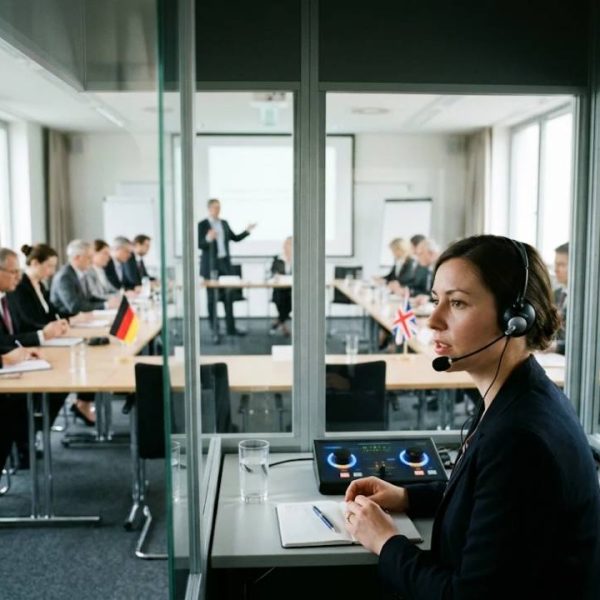
An interpreter handles spoken communication, which means speed, memory and composure are as important as vocabulary. In consecutive mode the speaker pauses every few sentences so the interpreter can deliver the message in the other language, which suits small meetings, factory visits and negotiations where trust is built through conversation. In simultaneous mode the interpreter speaks almost at the same moment as the original speaker, usually from a booth with headsets for the audience, which suits conferences and large events. Interpreters prepare by studying agendas, slides and technical terms beforehand, because there is no time to look anything up once the session begins. Good ones also read the room, noticing when a joke will not travel or when a polite German phrase needs a warmer English equivalent.
What a Translator Actually Does
A translator works with written material such as contracts, manuals, websites, reports and correspondence. The work happens at a desk, with time to research terminology, consult reference sources and revise the draft until it reads naturally. Translators usually work into their native language, because a nuanced sense of style is very hard to fake. They also use tools such as translation memory and glossaries, which keep repeated phrases consistent across large projects and make updates faster. When you need a document that will be read many times, filed for years or checked by a regulator, a translator is the right specialist, and the finished text can be reviewed, corrected and approved before anyone relies on it.
How to Decide Between the Two
Start by asking whether the exchange is live or recorded. A trade fair, a board meeting, a court hearing or a site inspection calls for an interpreter, while a data sheet, a patent filing or a staff handbook calls for a translator. Some projects need both, for example a conference where the slides must be translated in advance and the speeches interpreted on the day. If you want a clear overview of the differences, this explainer on interpreter versus translator roles sets out who to hire for which situation. Always tell the provider about the audience, the subject and the level of formality, since these details shape the choice of person and the preparation they need.
Preparing a Meeting With German Speakers
Preparation is the single biggest factor in how well an interpreted meeting goes. Send the interpreter your agenda, participant list, slide deck and any specialist vocabulary at least a few days in advance, and offer a short briefing call if the topic is technical. Speak in clear, complete sentences, avoid heavy slang and give the interpreter a moment to finish before moving on. German business culture tends to value precision and structure, so a well organised agenda is appreciated and makes the interpreter's job easier. Plan breaks too, because live interpreting is mentally demanding, and professionals working simultaneously normally rotate in pairs every twenty to thirty minutes to keep accuracy high.
Preparing Written Material for Translation
Written projects benefit from similar groundwork. Supply the files in editable formats where possible, include earlier translations or approved terminology, and explain who will read the final text. If your project also reaches neighbouring markets, a provider offering french translation services can assign a native linguist who specialises in your field, whether that is law, engineering, finance or marketing. Ask for a short query list at the start of the project, because unclear source sentences are easier to fix early. Agree on a deadline that allows for review, and remember that rushed work is the most common cause of avoidable errors in business documents.
Checking Credentials and Standards
Qualifications matter in both professions, although the proof looks different. For interpreters, membership of a recognised association is a useful signal, and the International Association of Conference Interpreters publishes professional standards that show what good practice looks like in the field. For translators, look for relevant degrees, certifications and a clear quality process with a second reviewer. Ask for references or sample work in your sector, and be wary of providers who promise unusually low prices or instant delivery on complex material. A reliable provider will be open about how the work is done and will not hesitate to explain its review steps.
Budget, Timing and Common Mistakes
Interpreters are usually booked by the half day or full day, with extra costs for equipment and travel, while translators are normally paid by word count with surcharges for urgent or highly technical text. The most common mistakes are hiring a bilingual colleague for a task that needs a trained professional, sending materials at the last minute, and assuming that a translator can also cover live events. Treat each service as its own line in the project plan and give both enough lead time. When the roles are clear and the preparation is solid, German and English speaking teams can work together with far less friction and far more confidence in what is being said and written.
Neueste Beiträge

Certified Translation in the U...

Traduceri legalizate pentru ac...

How to Prepare Russian Documen...

What Good Indonesian Translati...

Certified Translation for Univ...
Wine and Food Tourism for Russ...
Teilen Sie es.

Links
Wir verwenden Cookies
Wir verwenden Cookies, um Ihnen die beste Nutzung zu bieten, Ihre Einstellungen zu speichern und zu verstehen, wie die Website genutzt wird. Sie können alle Cookies akzeptieren, optionale ablehnen oder Kategorien einzeln wählen.
DatenschutzrichtlinieCookie-Einstellungen
Wählen Sie, welche Cookies wir verwenden dürfen. Notwendige Cookies bleiben aktiv, weil die Website ohne sie nicht funktioniert.
Weitere Informationen finden Sie in unserer Datenschutzrichtlinie.